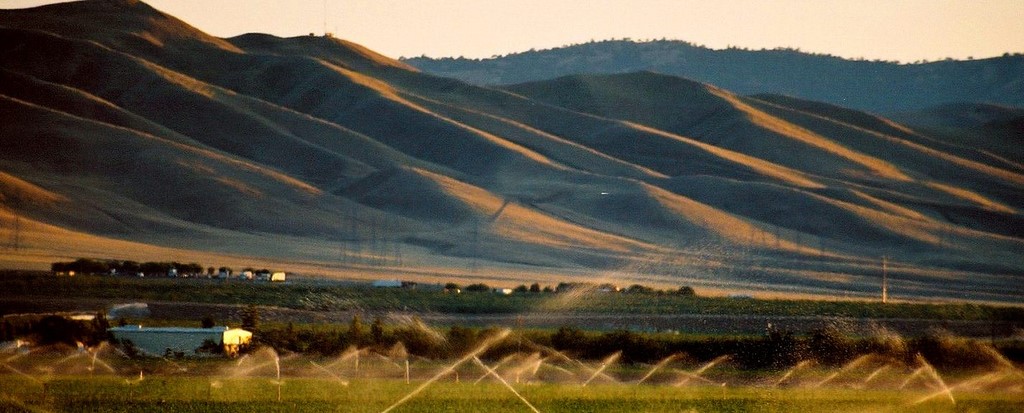
Complex Systems Thinking for Just and Sustainable Rural Futures
Unsustainable and inequitable systems of food and energy are sustained by infrastructure, institutions, and values. Complexity science helps us understand—and transform—them.
Rural communities are often embedded in unsustainable and unjust systems, held in place by entrenched institutions, infrastructures, and cultural values. My research draws on a wide range of disciplines—including natural resource management, development studies, sociology, geography, and complexity science—to understand how these systems persist and how they might be transformed. I use mathematical and computational modeling, often in conjunction with qualitative and quantitative data, to explore how existing structures shape resilience and equity, envision alternative futures, and identify leverage points for structural change.
My work spans three interconnected tracks:
Theoretical modeling of structure-function relationships in social-ecological systems, drawing on insights from complexity science and critical transitions theory.
Empirically grounded, participatory modeling, developed in collaboration with communities and stakeholders, to explore future scenarios and analyze how infrastructure and institutions affect the distribution of risks, benefits, and possibilities.
Qualitative research on narratives and belief systems, using interviews and surveys to investigate how dominant and countervailing narratives shape development pathways and justify particular systems of production.
See my current and recent projects here.
 Nusrat Molla