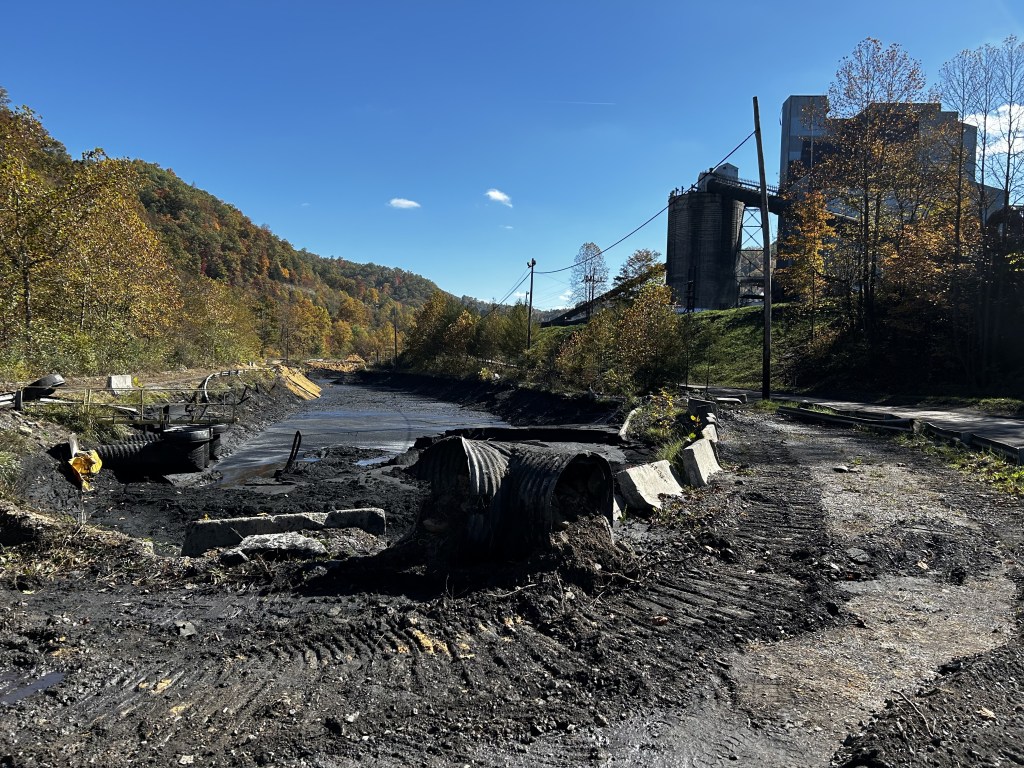
Modeling Post-Coal Futures in Central Appalachia
Sustainability transitions such as the energy transition will inevitably reshape rural communities long dominated by extractive industries. This study explores the challenges of overcoming entrenched dynamics of extractive industries in Central Appalachia’s coal mining communities using a combination of systems modeling and interviews and participant observation. Systems modeling is used to explore varying visions of post-coal futures and the pathways to achieve them, considering the impact of extractive legacies on the region’s institutions, infrastructure, and natural resources. This study aims to provide insights into how entrenched power structures influence transition pathways while exploring fundamentally different futures for the region.
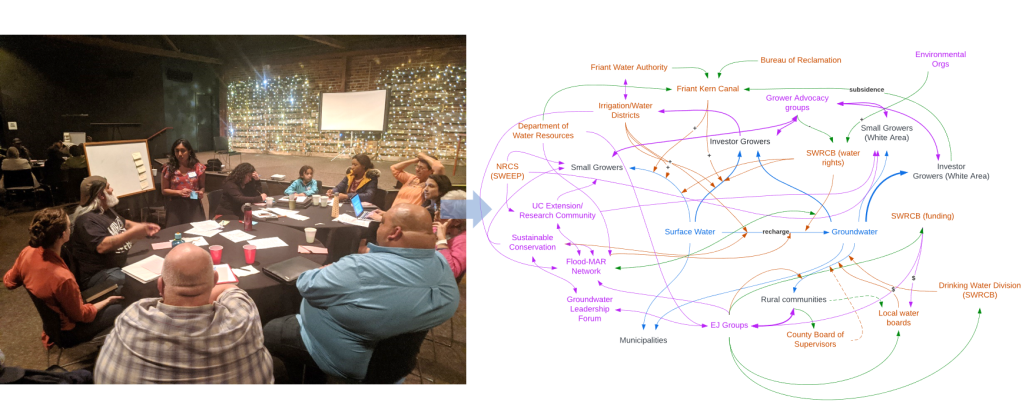
Modeling Narratives and Influence in Water Governance in California’s San Joaquin Valley
This study combines modeling with qualitative analysis of interviews and focus groups with growers, residents of rural communities, and advocacy groups centered around questions of water governance in California’s San Joaquin Valley. The model is then used to explore how these narratives how actors organize and form coalitions and strategies for enacting change, and the implications of the changes implied by different narratives for how different groups can influence and are influenced by each other. This work aims to bring together top-down structural approaches to governance and bottom-up perspectives that aim to understand how people experience, respond to, and perceive governance.
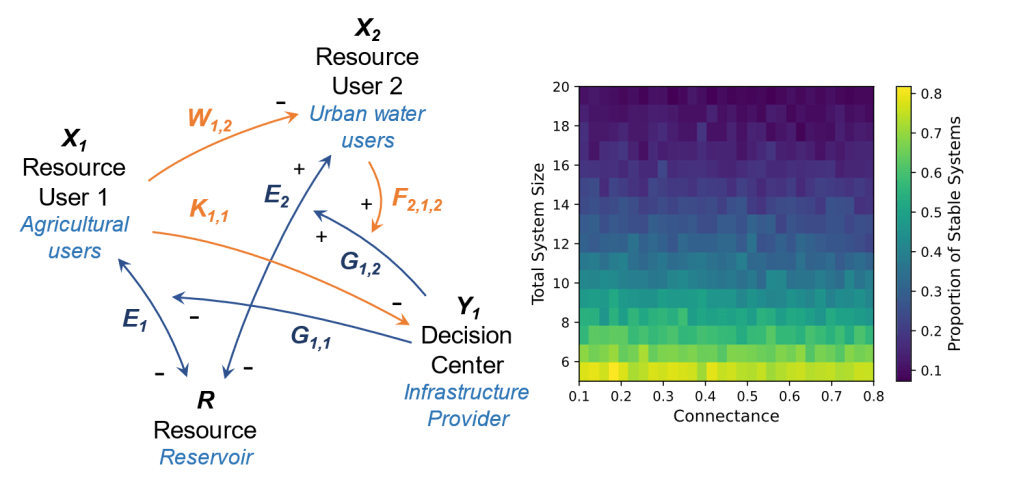
Stability of Governance Systems
This study develops an approach for modeling different configurations of interactions among groups of resource users that rely on a common-pool resource and the infrastructure and institutions that mediate their access to that resource. I use this modeling approach to analyze thousands of variants of resource governance system structures to understand how different topological features and types of interactions influence the stability of resource governance. The results reveal how greater diversity, heterogeneity, and interdependence among actors cause systems to be more susceptible to change, while features like a greater number of non-government organizations and strategies that take advantage of multiple decision-making venues are stabilizing. Find the full study here.
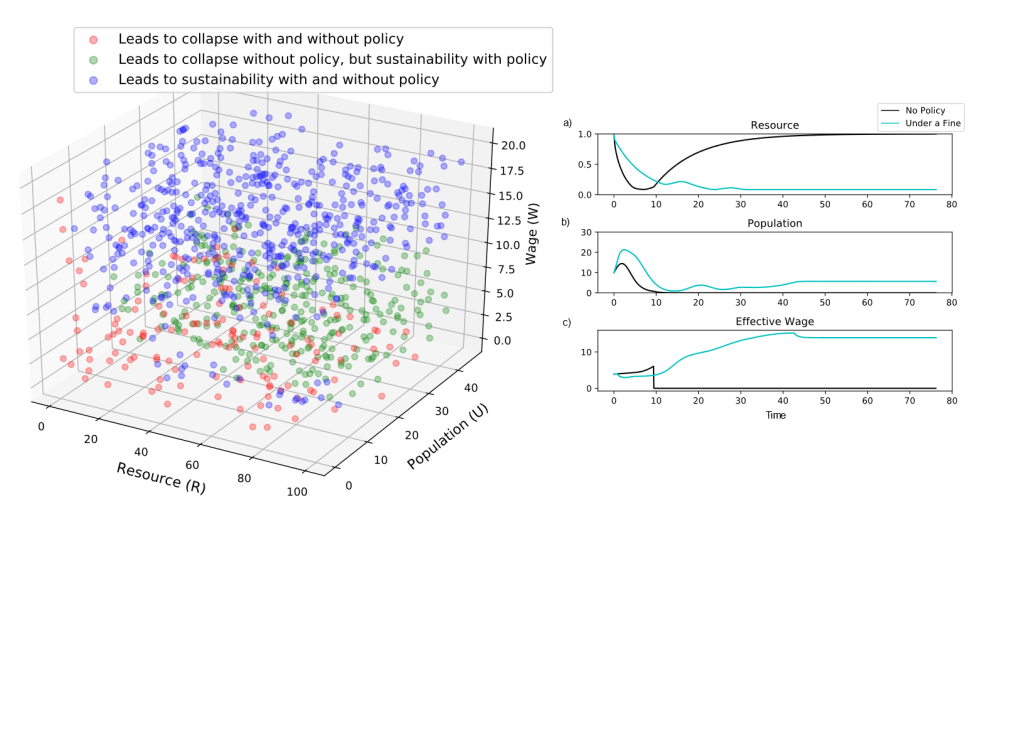
Dynamics of Resource-Based Communities
Resource-based communities are rural communities that rely economically on a single industry based on capital-intensive resource extraction. These communities face a unique contradiction between their ability to earn a livelihood and their quality of life. Using a stylized dynamical systems model of asymmetric resource access and control in resource-based communities that links industrial resource degradation, community well-being, and migration in response to economic and resource conditions, I explore how different extraction policies impact system resilience and community wellbeing. The resulting paper can be accessed here.
 Nusrat Molla